
Photo courtesy of Fonts In Use
Bruna Fontevecchia is the editor and co-founder of Anchoa, an independent, annual print magazine that explores gastronomy through ecology, food production systems, history and culture. We chatted with Bruna to hear more about why she founded the magazine, what it means to publish print in today’s world, and how Latin American food is finally getting its flowers.
This interview has been edited for length and clarity.
Bella: Why Anchoa? What led you here?
Bruna: It’s a partnership with my romantic partner, Max. We were first drawn to the format of print—that was really what started it. From there, we became cautious about the responsibility that comes with bringing something physical into the world. Do we need another object?
That question guided us. As a consumer of food journalism, I noticed that globally, so much content is inclined toward consumption—which makes sense. A lot of food media focuses on “top 10 places to eat,” or recipes that require buying specific things. I love that kind of content and consume it myself, but I felt we couldn’t offer that. We needed to offer something different.
Through that exploration, we realized there’s a whole world of food‑adjacent content that isn’t being explained within the context of food. There are subjects tied to climate and communities that aren’t being looped into food conversations.
“Even though it’s a niche magazine, it’s very small, but we do try and think massively. ”
After almost four years—we’re working on our fifth issue right now—it’s become more of an ecology and anthropology magazine than anything else. But we don’t call it that, because I think our mission is better served by reaching a wider audience. Even though it’s a niche magazine and very small, we try to think massively.
Bella: It's so clear, as a reader, how much intentionality has gone into every choice. How does the tactile experience relate to the stories being told?
Bruna: For me, it’s essential to show that the subjects we publish are important. They deserve to be printed on good‑quality paper, with care given to the font, the spacing between letters, and the overall design. They deserve to exist in printed matter. The format itself supports that intention.
Bella: What have you been able to gain through translating works into English? Do you feel that anything has lost?
Bruna: I’m really proud of the transition to bilingual publishing. We struggled a bit with English‑speaking stockists. At first, the response was very positive, but then we were told, “We can’t stock it because it’s in Spanish.” That was upsetting, especially because other foreign‑language magazines were being accepted.
We’re going to continue being bilingual. Every single piece in Issue 5 will be in English as well. Someday, we might do a podcast episode in English if it makes sense. But it’s incredibly important to cater to a Latin American and Spanish‑speaking audience—I wouldn’t want to exclude anyone.
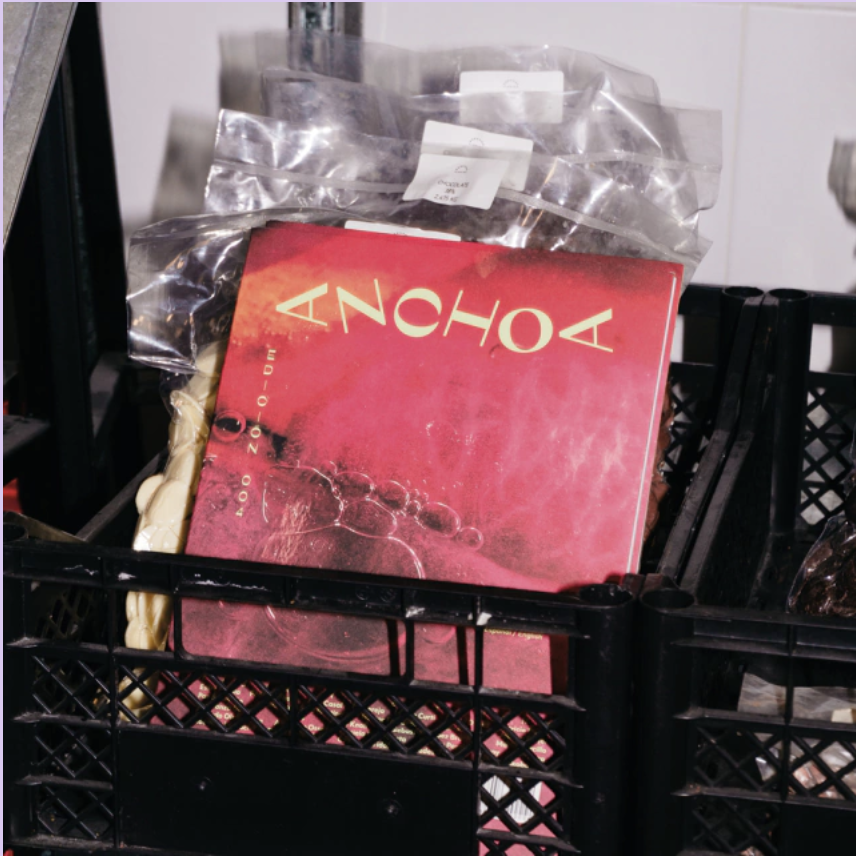
‘There's a lot to uncover. And there’s a great responsibility.’
Image Source: Anchoa Magazine
Bella: You’re telling the Latin American story, mostly for people within the community. How do the various media you use help move the story along?
Bruna: We started with print, in Spanish. We published three print issues, and after Issue 2, we developed the podcast. Cohesion across formats has always been important. We also have content that lives only online through Club Anchoa, which operates on a very small subscription basis.
If there were a formula for how we build an issue, it would be a 50/50 split between visuals and writing. You get one opportunity to draw someone in when they first look at a piece. We need eye‑catching, harmonious imagery to support the data and research in these stories so they work together. Many of the subjects Anchoa explores aren’t welcomed in all spaces.
Someone might buy the magazine and never read it—they might simply find it beautiful enough to keep on a coffee table. But then a friend comes over and asks, “What’s this?” Maybe they read it. Maybe they’re exposed to subject matter they would never have encountered otherwise. That’s where I feel we’ve done a good job.
“This is about the joy of knowledge. And it doesn’t mean that we shy away from subjects that are painful to read.”
This has to be a desirable object. It’s an object first—but within it, there’s a plurality of voices. Everyone has their own way of speaking, writing, and researching. We make sure there’s no yellow journalism on our pages. Nothing is written in all caps, as if it’s yelling.
This is about the joy of knowledge. That doesn’t mean avoiding painful subjects. I want to be cautious about what we publish so that any reader can give us a chance. These topics aren’t about being left or right—they’re about the history of humanity and our 12,000‑year relationship with food and its domestication. There’s still so much to uncover, and there’s a great responsibility in that work.