Pío Nono Unraveled: Longing and Memory in My Mother’s Kitchen
A version of this essay was published as "Pionono Unraveled: Longing and Memory in My Mother's Kitchen" in Gastronomica: The Journal for Food Studies, vol. 26, no. 2 (Summer 2026).
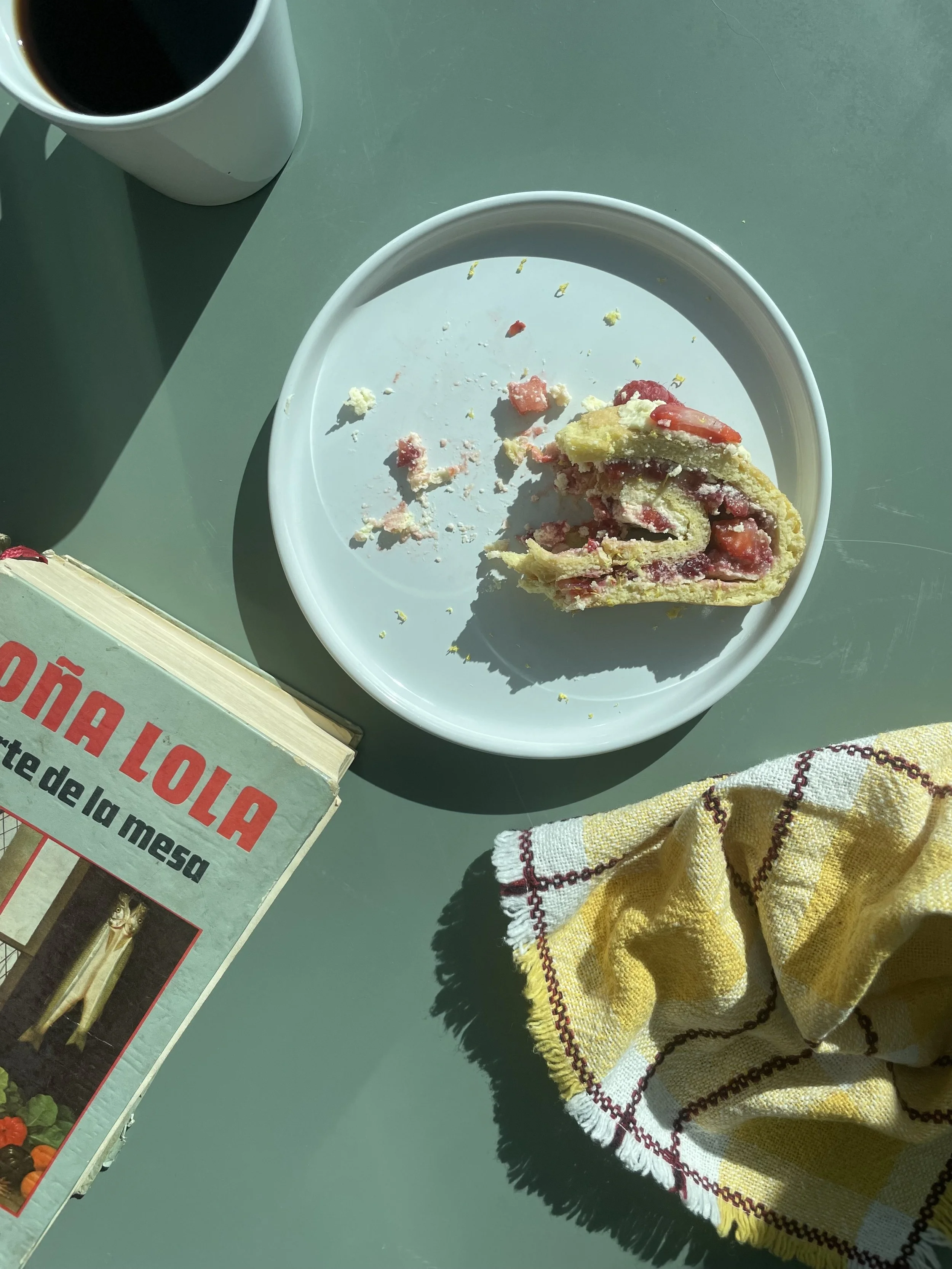
Image Source: Isabella Schnee
My mother, who insists she's not a baker, has made my father an Argentine birthday cake every year for as long as I can remember. Four decades of the same dessert—an airy sponge base, filled with Chantilly and fresh fruit, then rolled into a spiral—a pionono. She always tops it with something bright, to balance the cream and bring out color. When he turned seventy, she arranged blueberries into a "7" and "0."
It's one of those classic desserts, bound to impress but easy to make. Piononos can be savory, or salado, but she was only ever interested in the sweet ones, despite her fear of baking. It's too rigid, she'll say, waving off recipes, averse to precise measurements and cook times. She cooks like her father—intuitively, by smell, with the wind. Nothing she makes ever turns out the same twice. Except for this cake.
Buenos Aires, 1982
They met in Buenos Aires in 1982, near the end of Argentina's last military dictatorship. She was twenty-four. He was only a few years older, a Brooklyn journalist sent to cover the Falklands War, known to Argentines as la guerra de las Malvinas. It was a frivolous quest of Margaret Thatcher's and a welcome diversion for Argentina's government. While soldiers marched toward these remote islands, the regime continued its clandestine terror at home.
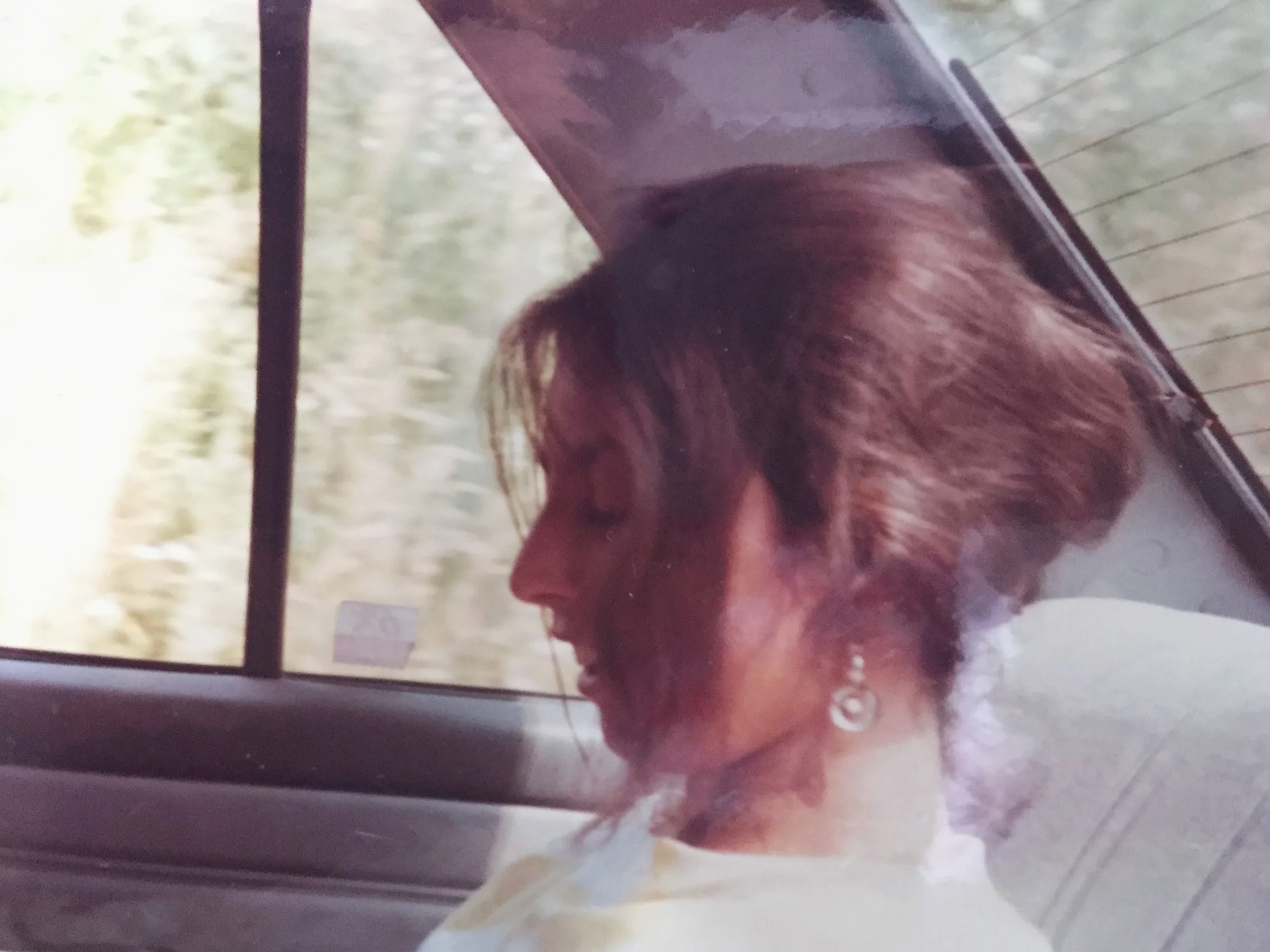
Image Source: Monica Schnee
From 1976 to 1983, Argentina was ruled by a brutal military junta. Deceptively, the word translates to "council," but this, instead, was a small group of generals who had seized power and governed through fear. Under the banner of anti-communism, they carried out what would later be called the Dirty War, la guerra sucia, a campaign of state-sponsored terror in which tens of thousands of civilians were abducted, tortured, and killed. At night from their own homes, walking in daylight, leaving university—they were pulled into black Ford Falcons and vanished. When families of the disappeared would go to the police for help, they were met with fear, intimidation, or denial. One of the regime's public health campaigns, aimed at curbing noise pollution, plastered the phrase el silencio es salud—"silence is health"—across newspapers, billboards, even the Obelisco in the center of Buenos Aires. Stay quiet, or disappear.
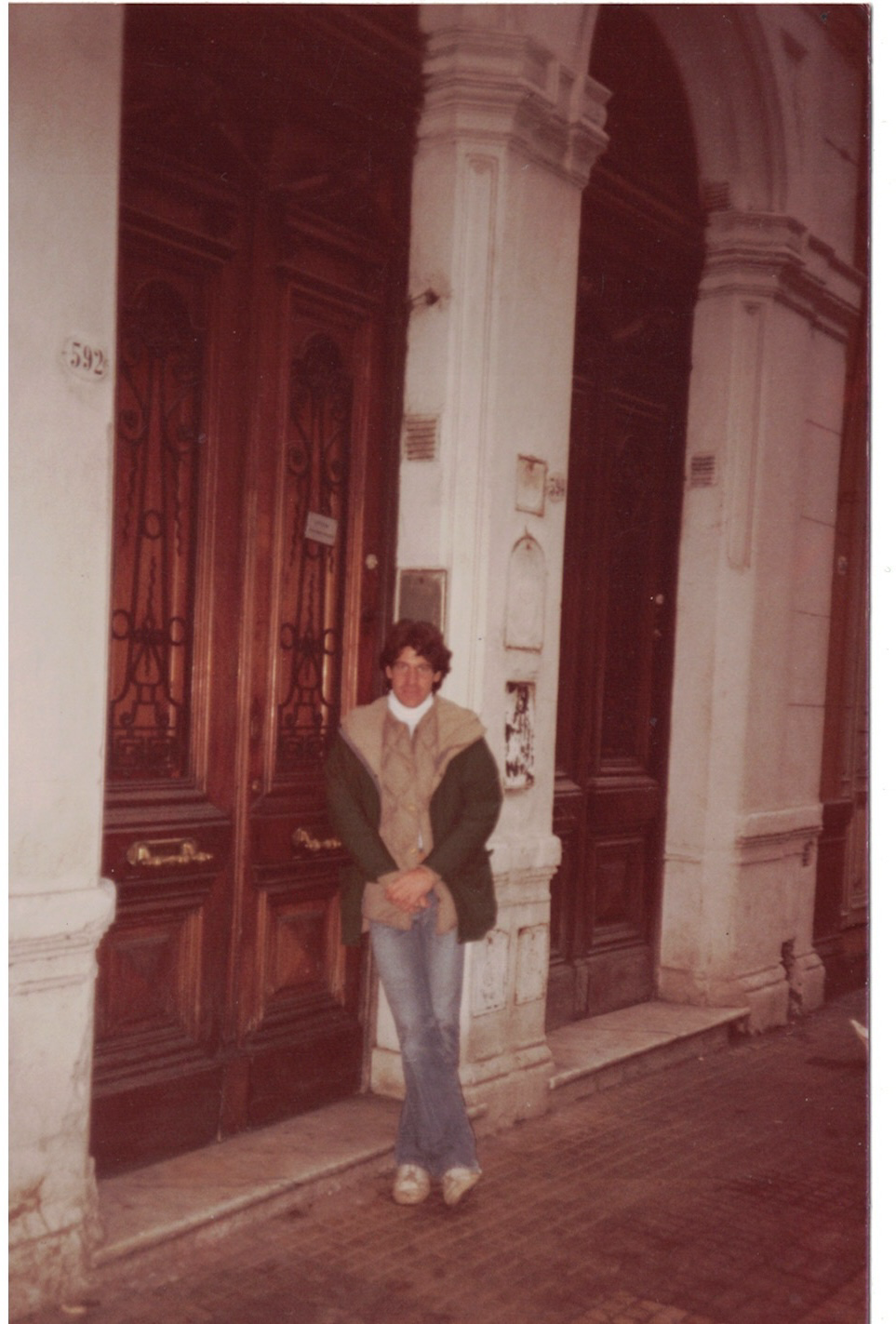
Image Source: Monica Schnee
When she saw my father for the first time she was disinterested, and he was in love. It took some time for my father to grow on her, but he did. Eventually she found his effervescence endearing and she moved, less than a year later, to Atlanta to be with him. What came to light almost immediately after emigrating confirmed what she, as a teenager, told herself were only nightmares: the house behind theirs was quietly converted to a detention and torture center. In her sleep she could hear the screams of the disappeared. Leftists, scholars, students, Jews, like her.
So when she got to the States, she was a bit of an outsider. No one in Atlanta knew what to call her—she wasn't quite white, she certainly wasn't Black, and when they assumed Native American, they bewildered when she corrected. Her olive skin betrayed her British English that was coated in Latin American inflection.
My father was mostly away on assignment while she waited, unable to work until her permits were processed. It was in that linoleum kitchen where she perfected her pionono. The annual cake brought routine and ritual to the inconsistent life they began to build together. She was exceptionally different and therefore alone. So, she wrote home and read Freud and cooked constantly.
The Cake
The cake is simple. While the oven preheats, my mother gingerly separates the eggs and whips the whites with a splash of vanilla until they hold their shape. When I was small and she'd crouch down next to me to test their stiffness, I thought she was made of magic. She'd slowly tip the bowl, eyes wide in awe, dimples pressed into her cheeks. The glossy peaks clung to the metal, suspended midair. "¿Ves?" she'd ask excitedly. See?
In another bowl, she mixes the yolks with sugar until they turn from sun gold to a thick, pale yellow. "Poco," she warns, sprinkling the sugar sparingly, "Si no, se pone empalagoso." Not too much, or it will be too sweet. Then, she folds in the flour and whipped whites slowly, carefully scraping the bowl's edge with her spatula in one clean movement.
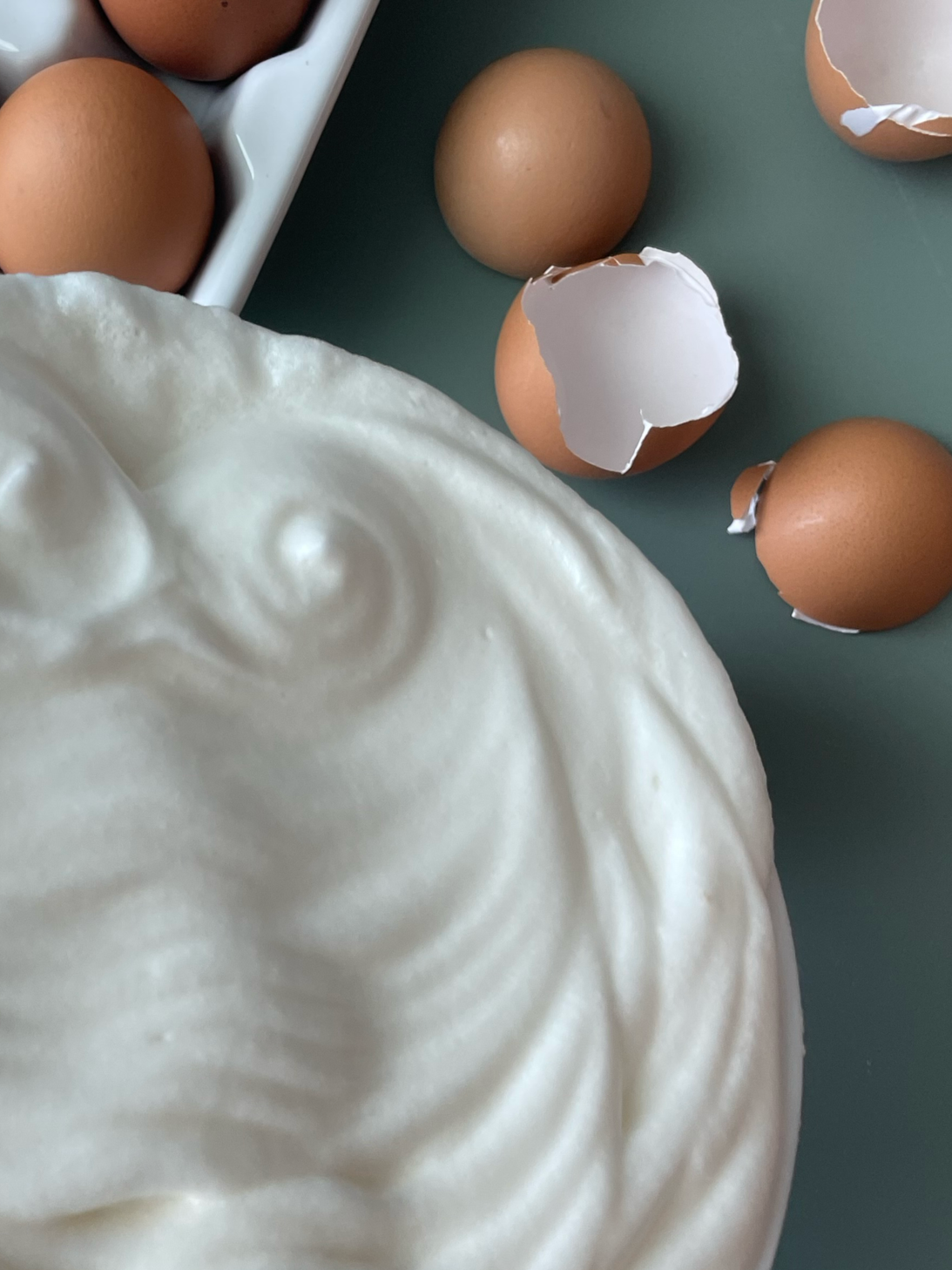
Image Source: Isabella Schnee
Outside the kitchen, my mother is reserved, careful to maintain the protective layer she's built over the years. The other mothers at school, on the rare occasions she could come to pick us up, were unwelcoming. In response, she kept a distance and held us close.
She dances between the sink and refrigerator, glowing. She hums and sways and improvises, borrowing a pinch of this from Yotam Ottolenghi and a dash of that from Claudia Roden.
This is the version of her that my father knows, that we get to know. I can close my eyes and see her standing at the stove in her waxy apron, a wedding gift, with one knee bent, the other hyperextended. She's holding a wooden spoon in her left hand and has the right one resting on her hip in a loose fist. I know she is thinking of her father and smells him in the room.
The batter for the pionono's base is poured evenly onto a sheet pan lined with parchment paper and baked briefly, just until the scent of vanilla starts to fill the kitchen. Once removed, it's covered with a damp dishcloth and flipped upside down. The parchment is carefully peeled away. While the sponge cools, she washes the fruit and whips the cream. Sometimes she grates in lemon zest, just enough to cut the richness.
The whipped cream is spread edge to edge, and the fruit laid out lengthwise across half, sparing the first inch or so. That edge gets tucked first to form the spiral. Here, the dish towel becomes an implement: she lifts it gently, coaxing the sponge into a roll. Fruit finds its place along the exposed cream as the spiral forms. Once fully rolled, it's transferred to a platter—porous and springy, its surface bare. Front-facing, the spiral reveals itself, curling inward in soft layers of yellow, white, and red. She covers the outside with the remaining cream and scatters the rest of the fruit over the top. When it's all finished, the cake looks like something out of the '80s—and in many ways, it is, suspended in time.
Doña Lola
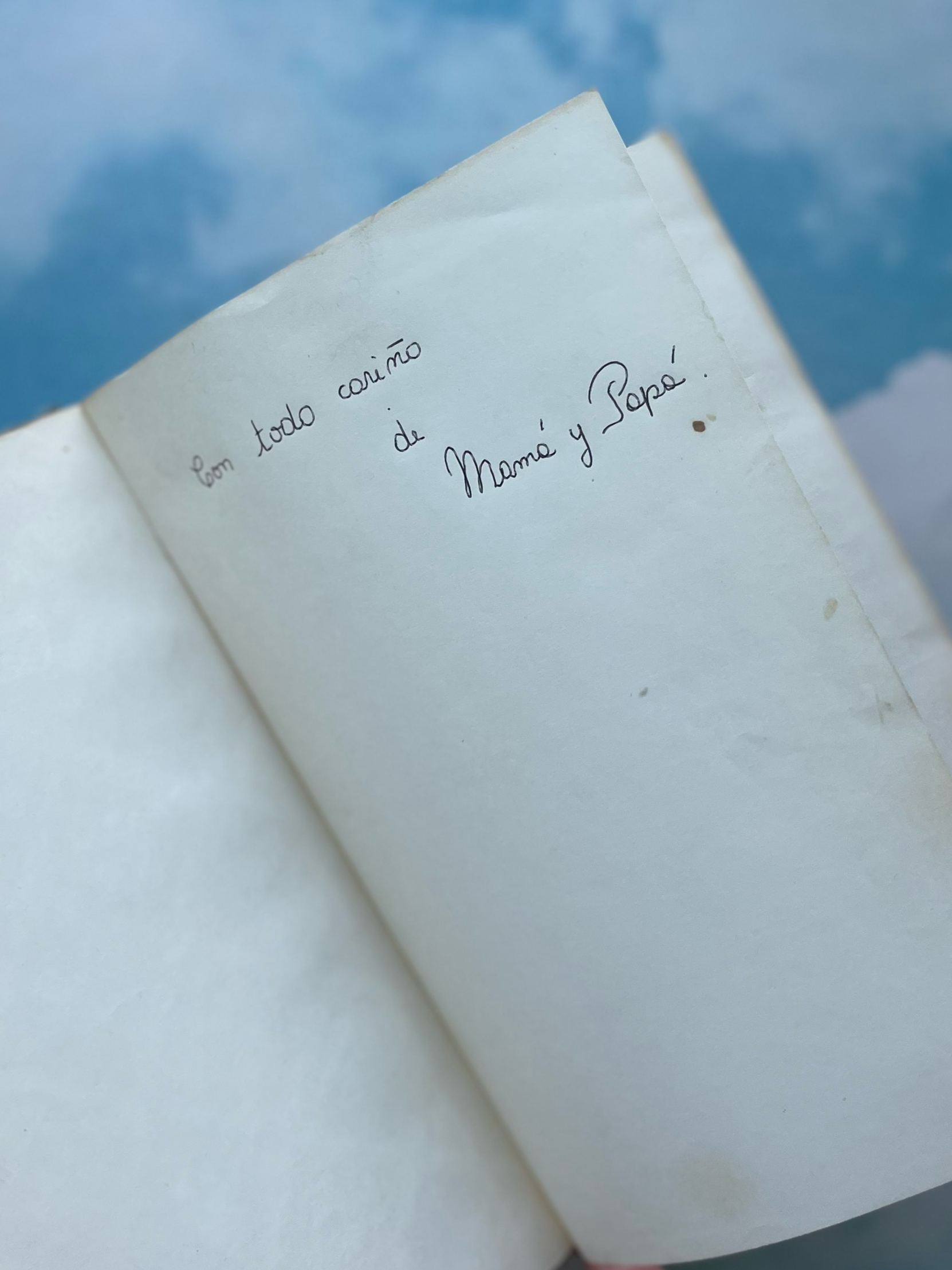
Image Source: Isabella Schnee
The recipe comes from Doña Lola, a cookbook found in many Argentine kitchens, especially among those of a certain generation. My grandfather gave it to my mother when she left for the States. He inscribed it—a feat and a tender gesture from a semi-literate man who never made it past the second grade. He never learned to write, so he passed his recipes along through demonstration, rhythm and repetition. When my mother moves through the kitchen, she mirrors him, reaching for the salt without looking, letting it fall between her fingers through the steam.
Piononos show their colors when they're sliced carefully and slowly so as not to disassemble. Seemingly plain from the outside, their complexities lie within, each layer building upon itself cyclically. When she cuts into the cake each year, looking over the flickering candle at my father's beaming face, she celebrates the life they built.
In my mind's eye, I have two moms: my mother in English, and my mother in Spanish. Sometimes they show up in the same sentence, speaking in unison. Other times, they appear fractured, one voice louder than the other. But in the kitchen, they come together.
Doña Lola's Pionono
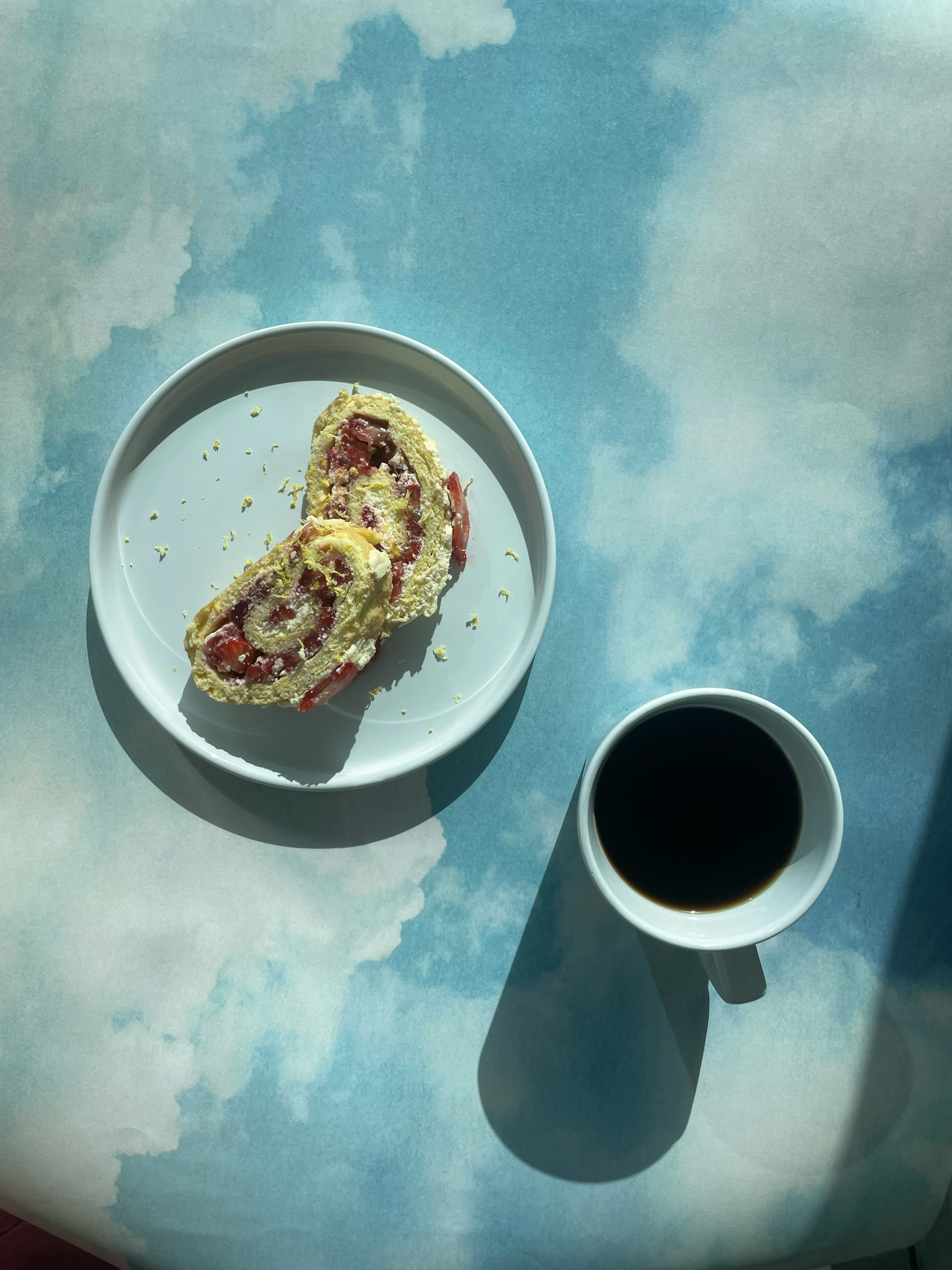
Image Source: Isabella Schnee
Serves: ~10 | Time: ~40 minutes
Ingredients
For the sponge cake:
6 eggs, separated
2 tbsp sugar
2 tbsp flour, sifted
A drop of vanilla extract
For the filling:
1 cup heavy cream
A drop of vanilla extract
Fresh fruit of your choosing (berries, sliced stone fruit, etc.)
Equipment
Spatula, electric mixer, baking sheet, parchment paper, three mixing bowls, two ramekins, one prep bowl, clean dishcloth
Instructions
Preheat the oven to 375°F. Line a baking sheet with parchment paper.
In one bowl, beat the egg whites with a drop of vanilla until stiff peaks form.
In a second bowl, beat the yolks with sugar until pale and thick — about 3 minutes on high.
Gently fold the sifted flour and a spoonful of the whipped whites into the yolk mixture. Once lightened, fold in the rest of the whites carefully, using a spatula.
Spread the batter evenly across the lined baking sheet — about ½ inch thick. Bake for 8–10 minutes, or until lightly golden and springy to the touch.
Cover with a damp dishcloth and invert the cake onto a clean surface. Peel off the parchment and let cool completely under the towel.
In a third bowl, whip the cream with a drop of vanilla until soft peaks form.
Once the sponge is cool, spread whipped cream across its surface. Arrange fruit over one half, leaving about an inch of space at the edge closest to you.
Gently roll the cake into a spiral, using the towel to help guide it. Transfer to a platter.
Frost the outside with remaining whipped cream and top with more fruit. Slice gently to reveal the spiral.